Learning to read does not happen all at once. For many young children, it starts with simple sounds, familiar letters, and repeated practice. A phonics class helps children understand how letters and sounds work together, so they can begin reading words with more confidence.
Phonics gives children a clear path into reading. Instead of guessing words from pictures or memorising every word by sight, children learn how to break words down. They hear sounds, match them to letters, blend them together, and slowly build meaning.
This makes reading feel less confusing. It also helps children develop skills they can use again and again.
What Phonics Means for Young Learners
Phonics teaches the link between sounds and letters. For example, children learn that the letter “m” makes the /m/ sound. They then learn how that sound joins with others to form words like “mat” or “man”.
This may seem simple, but it is a major step in early literacy. Children need to understand that spoken words are made of smaller sounds. They also need to see how written letters represent those sounds.
A good phonics class often includes:
- Letter sound practice
- Sound blending
- Word building
- Listening games
- Reading simple words
- Early spelling practice
- Short stories and rhymes
These activities help children move from hearing sounds to reading words on a page.
Why Sound Awareness Comes First
Before children can read words well, they need to hear sounds clearly. This skill is called phonemic awareness. It means children can notice and work with the small sounds in words.
For example, a child may hear that “cat” has three sounds: /c/, /a/, and /t/. Once they can hear these sounds, they can start matching them to letters.
This step matters because reading is not only about seeing letters. It is also about hearing how language works. When children can hear the first, middle, and last sounds in a word, they are better prepared to decode it.
Teachers may build this skill through songs, clapping games, rhymes, and simple sound play. These activities make learning feel natural and fun.
How Children Move From Sounds to Words
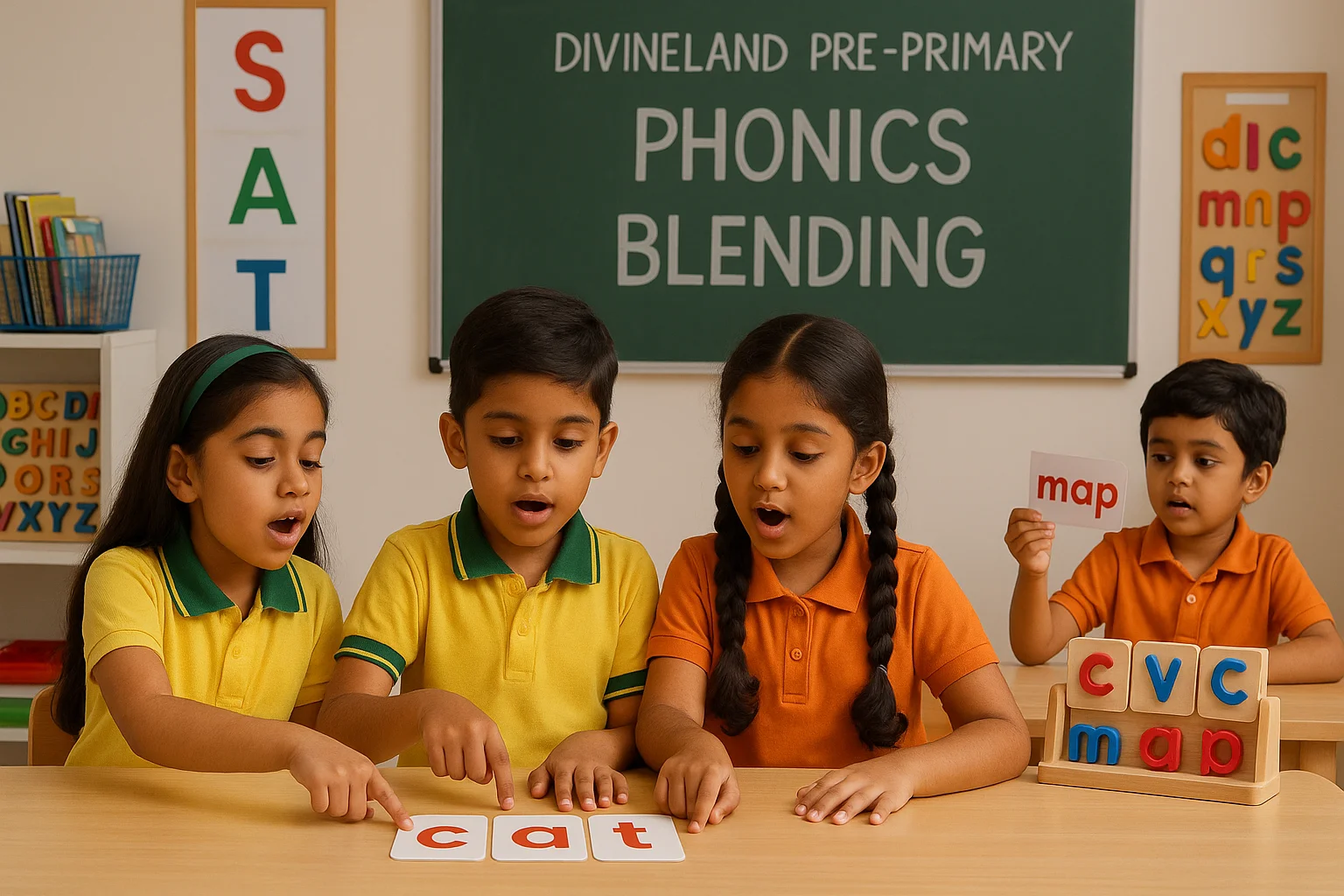
The move from sounds to words usually happens in small steps. Children first learn single letter sounds. Then they learn to blend them together.
For example:
- /s/ + /a/ + /t/ becomes “sat”
- /p/ + /i/ + /n/ becomes “pin”
- /d/ + /o/ + /g/ becomes “dog”
At first, children may say each sound slowly. With practice, they begin to blend the sounds faster. Over time, the word becomes easier to read.
This process helps children feel in control. They are not just guessing. They are using a method that helps them work out new words.
Why Phonics Supports Spelling Too
Phonics does not only help with reading. It also supports spelling and writing.
When children know the sounds in a word, they can try to write the letters that match those sounds. For example, if they want to write “sun”, they can listen for /s/, /u/, and /n/.
This helps children understand that spelling has patterns. They begin to see that words are not random groups of letters. Many words follow sound and letter rules.
Of course, English has many tricky words. Some words do not sound exactly the way they look. Still, phonics gives children a strong base. It helps them make better spelling choices and notice common word patterns.
Building Confidence Through Repetition
Young children need repeat practice. They often need to hear, say, read, and write the same sound many times before it becomes automatic.
This is why structured phonics lessons are useful. They allow children to revisit sounds in different ways. One day, they may practise through a song. Another day, they may use picture cards, puzzles, or a short reading task.
Repetition should not feel dull. When lessons include stories, movement, games, and hands-on tasks, children stay more engaged.
This matters because confidence grows through success. When a child reads a simple word by themselves, it gives them a sense of progress. Small wins help them become more willing to try harder words.
Why Structure Matters in Phonics Learning
Children usually learn best when phonics is taught in a clear order. A structured approach introduces sounds step by step. This helps children build on what they already know.
If lessons jump too quickly, children may feel lost. If they move too slowly, children may lose interest. The right pace helps children stay challenged without feeling overwhelmed.
The Education Endowment Foundation notes that phonics is most useful when it is systematic and suited to a child’s reading stage. This means lessons should follow a clear plan while still allowing teachers to respond to each child’s needs.
Making Phonics Fun and Meaningful
Phonics should not feel like dry drills. Children learn best when they are active and involved.
Fun activities can help children connect sounds with real words and stories. For example, they might match a sound to an object, act out a word, or find letters in a storybook.
This makes the lesson more meaningful. Children begin to see that phonics is not just a classroom task. It helps them read signs, labels, books, and simple sentences in daily life.
Programmes such as Lorna Whiston’s Fun with Phonics support young learners through interactive activities, games, puppets, puzzles, stories, and songs, helping children build reading, writing, and spelling foundations in an age-appropriate way.
How Parents Can Support Phonics at Home
Parents do not need special tools to support phonics. Simple daily practice can help children remember what they learn.
Here are a few easy ways to help:
- Read short books together
- Point out letters in signs and labels
- Play rhyming games
- Ask children to hear the first sound in a word
- Practise blending simple sounds
- Praise effort, not only correct answers
The goal is not to pressure the child. The goal is to make sounds and words part of daily life.
Even five to ten minutes of light practice can make a difference when done often.
Conclusion
A phonics class helps children move from sounds to words by giving them a clear way to understand reading. It builds sound awareness, letter knowledge, blending skills, spelling confidence, and early reading fluency.
With the right structure and a fun learning setting, children can begin to see reading as something they can do. This gives them a stronger start as they move into longer words, fuller sentences, and more confident reading.